FreedomWriting

  • Subscribe to our RSS feed.
  • Twitter
  • StumbleUpon
  • Reddit
  • Facebook
  • Digg

Sunday, November 21, 2010

The JFK Assassination

Posted on 8:14 AM by Unknown
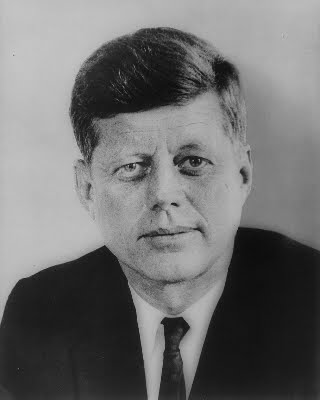
I've been writing blogs for more than three years now, and I have written about the John F. Kennedy assassination every year on the anniversary of that terrible event.

Tomorrow will be its 47th anniversary, and most of the people who were in Kennedy's entourage in Dallas on that day are gone now.

When I was growing up, I often wondered if the mystery of who actually pulled the trigger — or who arranged for the assassination to take place — ever would be solved.

But as the years have gone by, I have become less convinced that that will ever happen.

I still believe there was a conspiracy, and I could recite my reasons for believing that, but I also believe that solving the mystery no longer matters.

As it approaches the half–century mark, the Kennedy assassination is the Great American Mystery. It has become a cottage industry of sorts, and solving the mystery would eliminate the goose that laid the golden egg.

Go into any bookstore. You will find shelves devoted to the Kennedy assassination. Look online. You will find site after site dedicated to someone's theory, no matter how outlandish it may be, of what really happened on Nov. 22, 1963.

Folks in Dallas long ago learned there was money to be made from the Kennedy assassination, even many years after the fact. Oliver Stone came here to make his film "JFK" 20 years ago, and many people in the area made money from the cast and crew, providing food and lodging.

Long before that time, the Texas School Book Depository — which the Warren Commission told America was the place where Lee Harvey Oswald fired all the bullets at the Kennedy motorcade — was transformed into a museum that primarily exists to promote the Warren Commission's version of what happened.

A few blocks away, a museum dedicated to alternative theories opened its doors.

But it's been years since anything resembling a serious investigation into the events of Nov. 22, 1963, was undertaken.

And today, on the eve of the 47th anniversary, the only thing related to it in the Dallas Morning News is an article that reports that the man who came across Officer J.D. Tippit's body and reported to the police that he had been shot will be publicly honored tomorrow for his actions.

The man's daughter told the Morning News that her father never spoke about that day in the years that followed. "Maybe this will finally be the end of it," the man told the Morning News' reporter.

Well ...

Ironically, the man once worked for Jack Ruby, the Dallas nightclub owner who killed Oswald.

Everything connected with this case seems to go in circles.
Read More
Posted in 1963, anniversary, Dallas, Dallas Morning News, history, JFK, JFK assassination | No comments

Saturday, November 20, 2010

Uncovering a Coverup

Posted on 11:06 AM by Unknown


When I was a boy, the Vietnam War ripped apart the fabric of American life.

There was a time, early in America's involvement in the conflict, when the majority of Americans supported the U.S. effort. But public opinion gradually turned against the war and the president who oversaw it, eventually forcing Lyndon Johnson to abandon his pursuit of another term.

About two weeks before Johnson withdrew from the race, something happened in a tiny hamlet in South Vietnam that changed the dynamics of the public's perception of what was being done in its name halfway around the world.

I don't know if it played a role in Johnson's decision. I don't know if Johnson was even aware that it had happened. But it certainly played a prominent role in the first years of the next presidency.

On March 16, 1968, between 350 and 500 South Vietnamese civilians, most of them women, children and the elderly, were killed by members of a unit of the U.S. Army at a place called My Lai. Many of the victims were sexually abused. Some were beaten and/or tortured. Some were mutilated after they died.

It was not long after North Vietnamese forces had humiliated the Americans with their much–heralded Tet offensive in January 1968, which may explain, in part, the vicious nature of the Americans' attack, but it could never justify it.

I mean, how could anyone consider wiping out a tiny hamlet in South Vietnam any kind of payback for what the North Vietnamese had done? Only those, I suppose, who had been conditioned to regard all Asians as "gooks."

Initially, details were sketchy, as I recall, but I was just a child and not aware of much of what was happening in the world.

But the story that the American public was given was simply that — a story.

In fact, a coverup began virtually the moment the gunfire stopped on the day of the massacre. Official accounts spoke of a great victory, and Stars & Stripes said it had been a "bloody day–long battle" in which communist casualties outnumbered American, 128 to 1, but there were those in the Army who knew differently.

A soldier named Ronald Ridenhour who had heard of the massacre from friends gathered information on his own and sent letters about it to members of Congress and other officials about a year later.

In the annals of the My Lai massacre, It seems to me, that letter played much the same role as the letter from James McCord to the judge who presided over the original trial of the Watergate burglars a few years later.

Without that letter, the world probably never would have known the truth. It blew the lid off the coverup.

Journalist Seymour Hersh apparently got his hands on a copy of the letter and launched the investigation that would expose the dark side of the military's "body count" and "kill ratio" strategies. He published his findings with Dispatch News Service in November 1969.

About a week later, on Nov. 20, 1969, the media began to fill in the gaps. Time, Newsweek and Life gave considerable space to what Hersh had revealed.

The Cleveland Plain Dealer published explicit photos that had been taken at the scene — some of which can be seen in this post.

The coverup that had been successful for nearly two years came undone. And what had been originally praised by military leaders as an heroic chapter was transformed in the public's eyes into a despicable one.

It wasn't despicable because the media wrote about it. It was despicable because the media wrote the truth about what had happened.

It was a courageous thing to do, and I'm sure those who wrote for those publications faced their share of abuse for violating the code of silence that had kept well–connected violators from facing the consequences of their actions in the past.

Three members of a helicopter crew that had tried to intervene could sympathize.

They were denounced at the time by members of Congress. One died in Vietnam, but the other two received hate mail and death threats after they returned to the United States and were not recognized for what they had tried to do until three decades after the fact.

(I have often thought that it was such a cocoon of denial that must have permitted a serial killer nicknamed "Citizen X" to get away with his crimes in the Soviet Union as long as he did. Soviet officials refused to acknowledge that such a thing as serial murder was possible in their country, dismissing it as a "decadent, Western phenomenon."

(To their great chagrin, they learned that not only was such a thing possible in the Soviet Union but the killer actually had been in custody early in the investigation and was subsequently released. Based on the number of killings that had already been committed when he was arrested and the number with which he eventually was credited, it is possible that more than three dozen lives might have been spared if he had not been freed.

(We will never know if there were any other My Lais during America's lengthy involvement in Vietnam — although it seems to me there almost certainly must have been — or whether any might have been prevented if there had been a more forceful response from the U.S. government.)

More than two dozen soldiers ultimately were charged, but only one, Lt. William Calley, a platoon leader, was convicted of murder. Calley was given a life sentence, but, in what was a controversial move at the time, President Nixon decided to have Calley released, pending his appeal.

Eventually, Calley's sentence was adjusted, and he served 4½ months in a military prison. He was sentenced to — and could have ending up serving — a life sentence.

Nevertheless, his conviction only served to widen the gulf that existed between those who supported the war and those who opposed it.

Last year, more than 40 years after the massacre, Calley publicly apologized for the first time.

The revelation that babies had been among the victims at My Lai led many antiwar activists to label all Vietnam veterans "baby killers." That wasn't fair, but I guess it was the unavoidable legacy of the event combined with the deception the American public had come to associate with the war in Vietnam.

Tales of murdered infants from that case were so abundant at the time one might have thought that "My Lai" meant "nursery."

I must admit that I have often wondered if the G.I. culture in Vietnam — as one soldier put it, "most people in our company didn't consider the Vietnamese human" — contributed not only to My Lai but other atrocities during the Vietnam era — like the napalm attack that led to the Pulitzer Prize–winning photograph of children fleeing from their burning village in 1972.
Read More
Posted in 1969, Dispatch News Service, history, journalism, My Lai, Vietnam, William Calley | No comments

Friday, November 19, 2010

The Vision Thing

Posted on 5:08 AM by Unknown

"Oh, the vision thing."

George H.W. Bush

In the waning days of the 2010 midterm campaign, I found myself thinking a lot about Barack Obama's insistence that there was nothing wrong with the message, it just hadn't been conveyed properly.

Well, it seems the voters, in that time–honored way, shot the messenger. But was it fatal? Or was it, in the words of the Black Knight in "Monty Python and the Holy Grail," merely a flesh wound?

From what I could see, the voters agree with Obama about many of the things that need to be done. But they elect presidents to make often painful choices between what absolutely positively must be done and what needs to be done but can be put on the back burner.

They did not believe that Obama has been making those tough choices so they tried to get his attention in the only way they could.

The resounding message from the voters on Nov. 2 was not that they had experienced a change of heart about Republican government. They are still wary of the Republican Party, still inclined to blame it for the policies that they believe contributed heavily to the economic mess we face today, and they are particularly concerned about its members who ran as Tea Partiers.

But they were willing to put all that to one side in this election and deliver an urgent message of their own to the Democrats.

The number of voters who told exit pollsters that jobs led their lists of concerns dwarfed everything else — health care, the environment, you name it. And those voters want to see improvement in that area.

Their message was clear — their expectations aren't being met.

What this means for the future of the Obama presidency is not immediately clear. I suspect much will depend upon what Obama does in the next couple of years. He must be a leader. He must bring diverse people together.

He will have to do things he has not had to do up to this point in his life — not just his political life but his life in general.

But Democrats in the House should have taken a long, hard, critical look at the leadership record of Nancy Pelosi.

The electoral defeat, the loss of control of the House was as much Pelosi's failure as Obama's. Yes, Obama is the president, the leader of his party. His support appears to have meant very little for embattled Democrats across the nation, and the Republicans' midterm triumphs are being interpreted as a rejection of Obama's leadership. Certainly, he deserves his share of the blame.

But a loss of this magnitude reflects poorly on the speaker, perhaps more than it does on the president. The president is the head of the executive branch of government; the speaker is the most visible leader of half of the legislative branch.

These were her people who got swept away in the Republican tsunami. Any serious evaluation of the reasons for this defeat must reach the conclusion that Pelosi failed to adequately defend her colleagues — and that is why her retention in a leadership role is so bewildering.

If I had been asked before the election, I would have said that no House speaker who presided over the loss of more than 60 seats in a single election would be kept in a leadership position.

I would have said that, it seems to me, the logical thing for a devastated party to do is seek new blood to lead it.

In fact, if it had been up to me, I would have chosen North Carolina's Heath Shuler over Pelosi.

Shuler, as you may know, spent a few years playing pro football, but he retired after injuring his foot, completed his degree work at the University of Tennessee (where he had been runnerup for the Heisman Trophy) and embarked on a new career in real estate. He was elected to the House in 2006, defeating an eight–term Republican incumbent in a traditionally Republican district.

Anyway, Shuler challenged Pelosi for minority leader and was defeated. The newspaper in the largest city in Shuler's district, the Asheville Citizen–Times, and its readers were not impressed. Leroy Goldman called Shuler's bid for the leadership role a "stunt," and Angela Leonard wrote in a letter to the editor that Shuler should go ahead and join the Republican Party.

Once again, a centrist takes the blunt of the punishment for the extremists' failures.

Pelosi has been speaker since Shuler came to Washington in 2007. In Pelosi's first election after becoming speaker, Democrats enjoyed gains that were primarily due to one of two things — the presence of Obama at the top of the ticket or the presence of George W. Bush in the White House for the previous eight years.

What happened in that election had little, if anything, to do with Pelosi.

But the 2010 election results had Pelosi's fingerprints all over them. She's a polarizing figure, and Republicans capitalized on that in advertisements from coast to coast.

Yes, it is true that this election was, in part, a referendum on Obama. But let's be clear here. They've been conducting presidential approval surveys going back to FDR's days, and what happened to Obama is nothing new in the American experience. It was a little more extreme than most, not new.

But there are certain warning signs Obama should heed as he prepares for his re–election campaign. When I see things like surveys that report that 42% of people under the age of 30 are familiar with the operating system for Google's smartphones but only 14% know who the speaker of the House will be in the next Congress — I have serious doubts about the stability of Obama's 2008 coalition.

That isn't an indictment of young voters only. It seems to me that more members of every demographic group could correctly identify some product than the incoming speaker of the House — and that isn't a very good commentary on the culture in general.

But, frankly, I find it hard to understand why a House speaker whose party has just lost more than five dozen seats, many in Midwestern states that are expected to play pivotal roles in the next presidential election, should be retained as her party's leader. Haven't congressional leaders been toppled for losing much less?

That, certainly, is what recent history has told us. Newt Gingrich, after all, lost his leadership role when the Republicans lost only a handful of seats after the 1998 midterms — but they had been expected to gain ground with Bill Clinton facing impeachment proceedings. I always felt Gingrich was ousted more out of disappointment than anything else.

Gingrich's successor, Dennis Hastert, remained in the House after Democrats reclaimed control of that chamber in 2006, but he did not seek a minority leadership role and retired two years later.

And the last Democratic House speaker before Pelosi, Tom Foley, went down in the Republican tidal wave of 1994. Would he have remained as minority leader if he had not been narrowly rejected? I doubt it.

Pelosi's main argument in favor of her retention seems to be the devout belief that, had it not been for whatever role she may have played in making the tough choices about which Democrats to throw under the bus so they could reallocate electoral resources from what had come to be seen as lost causes, the 2010 midterms would have been much, much worse.

Has a familiar ring to it, doesn't it? It certainly is an odd yardstick for success — "Things could have been worse ..." — but the White House uses it. We'll see how it works out in two years.

Actually, by choosing to keep Pelosi in a leadership position, Democrats seem to be taking their cue from the last time a party lost as many seats in the House as Pelosi's did. It was 62 years ago, when Joe Martin's Republicans lost more than 70 seats after controlling both chambers of Congress for two years.

The House speaker couldn't really take the rap on that one, though. It was a presidential election year, and Democratic President Harry Truman pulled off an unexpected victory over Tom Dewey. In the process, he swept some Democrats into office along with him.

Martin may have shared some of the responsibility for the 1948 losses, but most of it surely belongs with Dewey, the party's titular leader as its presidential nominee.

Martin was retained by the Republicans as minority leader. Then, a few years later, he was restored as speaker of the House when Republicans rode the popularity of Dwight Eisenhower back into congressional power. But they collapsed in the 1954 midterms and remained the minority party for the next 40 years.

So the back–to–the–future example of Martin and the Republicans of 1948 might not be the best one for Democrats to emulate — although, two years ago, I did write about speculation that Obama was following Eisenhower's lead.

If he was, somehow he must have wandered off the path — because, although Ike's Republicans, like Obama's Democrats, were reduced to minority status in the House in the midterm elections, Eisenhower's popularity rating always was greater than his disapproval rating. The same clearly cannot be said for Obama.

I guess, though, it's always possible that Obama knows what he is doing and, in time, he will be vindicated.

Call it that vision thing.
Read More
Posted in 2010, 2012, Democrats, Heath Shuler, House, leadership, midterms, Nancy Pelosi, Obama | No comments

Sunday, November 14, 2010

A Time to Lead

Posted on 6:30 AM by Unknown

"There go the people. I must follow them for I am their leader."

Alexandre Auguste Ledru–Rollin
(1807–1874)

In the aftermath of what Barack Obama generously called a "shellacking" in the midterm elections, there has been no shortage of advice for Democrats who are understandably staggered by the greatest loss of House seats by one party in one election in decades.

In this corner ...
  • E.J. Dionne writes in The New Republic that Democrats need to stick to their guns (so to speak), just like the Republicans did after their rejection in 2008.

    They should not listen, he says, to those who advise them to move more to the center.

    "Why should Democrats take Republican advice that Republicans themselves would never be foolish enough to follow?" he asks.

    Food for thought.

  • From the "What? Me Worry?/Collateral Damage" Department:

    Bob Shrum concedes, in The Week, that Obama made some mistakes in his first two years as president.

    But unless you've been mainlining the Kool–Aid as Shrum seems to have been doing, you won't so easily shrug off the lessons that are there to be learned from this experience.

    Shrum insists that, not only has Obama been doing the right things, it will be clear to all by 2012 that they were the right things to do, that it wasn't a case of overreaching or ignoring the jobs issue. No apology is necessary.

    What's more, Obama's much–criticized trip to India right after the election will be vindicated as the right course of action instead of remaining in the U.S. to pick up the pieces. Remaining here, Shrum suggests, would have been a sign of weakness. The blood would have been in the water.

    And Obama, he says, will be re–elected in 2012. No problem.

    Oh, and if any of the folks who voted for him in 2008 go under because they lost their jobs and couldn't get new ones while Obama obsessed over health care, well, they're just collateral damage (see Timothy McVeigh).

    (By the way, it was Shrum who, only a month before the just–concluded midterm elections, confidently asserted that "the Democrats will hold the Congress — yes, the House as well as the Senate."

    (More than 82 million Americans voted in the election. If fewer than 60,000 people — 8,000 in Colorado, 21,000 in Nevada, and 27,000 in West Virginia — had voted for Republicans instead of Democrats, the Senate would have been a 50/50 split, and all the talk today would have been about whether independent Joe Lieberman could be persuaded by the Republicans to caucus with them, giving them the majority.)

  • Ezra Klein at Newsweek metaphorically shrugs his shoulders. Sure, the Democrats lost the election, he writes, but they accomplished such great things.

    Great things that are likely to be overturned — if not in the newly elected Congress, almost certainly in the one that looks likely to be elected two years from now.

    But I'll get to that in a minute.

  • At the New York Daily News, Steve Benen says Obama should call the Republicans' bluff.

    Benen recommends turning the tables on the Republicans, proposing things their own people have proposed in the past. For example, he could take a page from the McCain–Palin playbook from 2008 and advocate "establish[ing] 'a cap–and–trade system that would reduce greenhouse gas emissions' and pursue 'alternatives to carbon–based fuels.' "

    What's more, Benen writes, "if the president were feeling particularly mischievous, he could endorse the tax rates adopted by Ronald Reagan, who oversaw rates considerably higher than the ones in place today. Would Republicans really condemn Ronaldus Magnus' tax policy?"


And in this corner ...
  • There's something vaguely unsettling (not to mention unseemly) about Karl Rove using the lyrics from a popular singer who is about half his age to make his point about Obama.

    But that's what he did — and fairly effectively, too — in the Wall Street Journal when he asserted that the president has a tin ear.

    Personally, I think Rove is right about that, but you have to consider the source. Rove clearly has an axe to grind.

  • So, too, does Peggy Noonan, a writer whose work I have admired since she wrote Ronald Reagan's memorable speech following the Challenger disaster nearly 25 years ago.

    Noonan observes the volatility of the electorate and reminds Republicans, flush with victory, that "things could turn on a dime," as they did with Obama.

    Obama's problem, she suggests, is that he did not hold the political center that played a vital role in his election in 2008, and that's a hard argument to deny following an election in which independents so visibly abandoned the Democrats and voted for Republicans. "To hold the center you have to respect your own case enough to argue for it," she writes, "and respect the people enough to explain it."

    Noonan's had some experience with the fluidity of the electorate, and she remembers the days in the mid–1990s when the Republicans took control of Congress. She tells Republicans that the right wing's favorite whipping boy, the media, "had a storyline" it was eager to sell — "[t]hese wild and crazy righties who just got elected are ... wild and crazy," and the media will try to sell it in 2011 as well.

    There is an impression among many voters — one that is a half–truth at best — that all the Republicans who have just been elected are extremist Tea Partiers. The media will seek to exploit that, Noonan warns. The media, Noonan says, will try to portray all newly elected Republicans as extremists so she urges incoming Republicans "to keep in mind the advice of the 19th century actress Mrs. Patrick Campbell, who once said ... that she didn't really care what people did as long as they didn't do it in the street and frighten the horses."

    And that is what Noonan tells new Republican lawmakers: "Stand tall, speak clear, and don't frighten the horses."
As an amateur historian, I appreciate Noonan's knowledge of great quotes and how she skillfully weaves them into what she writes.

I seldom agree with her, just as I seldom agreed with her boss, but, as a writer, I give her credit for the things she can do with words.

I've never really bought into this media bias stuff that she and the other right–wingers like to peddle. Oh, sure, I'll concede that there is some bias in the media, most of it in broadcasting. Perhaps that is at the heart of my problem. My experience in journalism has been confined to print — well, except for a couple of years that I spent appearing on a weekly cable access sports program as a representative for the newspaper for which I was working at the time.

But mostly I get the sense, from reading what I have read lately, that most people are looking at raw numbers and simply trying to reconcile those numbers with what they see on the ground. Obama insisted, in his post–election press conference, that the fault was not with the agenda but with communication.

That has a nice "shoot the messenger" sound to it, but the ultimate responsibility rests with the president — except that this president, like his predecessor, won't take responsibility for his errors in judgment.

So who does Obama suggest we blame?
  • If there isn't an answer to that by November 2012, the messengers who seem likely to get blamed, along with Obama, are the Senate Democrats who must face the voters in that election.

    Jack Kelly of the Pittsburgh Post–Gazette — who, incidentally, disagrees with Shrum about Obama's trip to India — is one of those to write recently about those senators.

    "Democrats who didn't drown in the Republican wave had to be dismayed by the news conference President Barack Obama held Wednesday before jetting off to India," Kelly wrote. "Particularly unhappy, I suspect, are the 12 Democrats in the Senate from states that voted Republican Tuesday who are up for re–election in 2012.

    "In essence, what the president said (in many, many more words) is that he heard what the voters were saying, but would ignore it."


    Those 12 Democrats — Bill Nelson of Florida, Debbie Stabenow of Michigan, Amy Klobuchar of Minnesota, Claire McCaskill of Missouri, Jon Tester of Montana, Ben Nelson of Nebraska, Jeff Bingaman of New Mexico, Kent Conrad of North Dakota, Sherrod Brown of Ohio, Robert Casey of Pennsylvania, Jim Webb of Virginia and Herb Kohl of Wisconsin — are clearly at risk in 2012.

    Now, the Class of 2006 was always going to be at risk, simply because of the numbers. Only about one–third of the Senate's seats is on the ballot in any election year. There are more in some years because senators die or resign, and special elections must be held to choose their successors.

    Because 2006 was such a good year for Democrats, that means more Democrats will be defending their seats in 2012. The same, actually, will be true of 2014, when the Democrats who were swept in on the Obama wave are up for re–election.

    These politicians — the president and these 12 senators — are going to have to unite behind a message. They need to be laying the foundation for that message now and building their cases, as individuals and as a group, for another term.
A chain is only as strong as its weakest link, though, and those Democrats simply cannot afford for the president, the man at the top of their ballot, to be their weakest link. In 2012, Obama and the national Democrats may well find themselves stretched too thin as it is by the endangered Senate seats they must defend and the Republican–held House seats they must pursue in hope of either reducing the GOP's advantage or eliminating it altogether.

Since he was elected two years ago, pundits have compared Obama to the most successful presidents in American history — and some of the least successful as well.

Where Bill Clinton stands on that scale is, of course, a matter of opinion, but the fact remains that he survived a disastrous midterm in 1994 to win re–election two years later — and eventually turned over a budget surplus to his successor. He just might have some useful insights for the current occupant of the White House.

In his memoir "My Life," Clinton recalled that the Democrats "got the living daylights beat out of us."

Clinton's recollections sound eerily familiar to what Obama and other Democrats said both before and after the election: "The Republicans were rewarded for two years of constant attacks on me," he wrote. "The Democrats were punished for too much good government and too little good politics.

"... Moreover, the public mood was still anxious; people didn't feel their lives were improving and they were sick of all the fighting in Washington."


Has a familiar sound to it, doesn't it?

But the setback of 1994 reminded Clinton of 14 years earlier, when he was defeated for re–election as governor of Arkansas. "I felt much as I did [then]," Clinton wrote. "I had done a lot of good, but no one knew it. ... I had forgotten the searing lesson of my 1980 loss: You can have good policy without good politics, but you can't give the people good government without both."

And Clinton went about adapting himself to the new political landscape.

It is something other presidents needed to do midway through their terms in office, but not all have.

Will Obama have the wisdom to see what he must do?
Read More
Posted in 1994, 1996, 2010, 2012, Bill Clinton, Democrats, midterms, Obama, presidency | No comments

Monday, November 8, 2010

The Mother of All Cliffhangers

Posted on 5:02 AM by Unknown


Back in January, I observed the 50th anniversary of John F. Kennedy's announcement of his candidacy for president, and I called it "The Birth of Camelot."

But that wasn't really accurate.

It probably would have been more accurate to say that, in early January of 1960, Camelot was conceived — although experts on Kennedy's life and presidency probably would tell you that the idea of that Kennedy — or any Kennedy — seeking the presidency was conceived many years earlier.

But the idea didn't bear fruit until 50 years ago today.

Well, perhaps it would be more accurate to say 50 years ago tomorrow because it wasn't until Wednesday, Nov. 9, 1960, that Kennedy was declared the winner of the closest presidential election in more than a century.

But it was 50 years ago today that the voters went to the polls.

"It was invisible, as always," wrote historian Theodore H. White of the process of democracy. "[I]t is the essence of the act that as it happens it is a mystery in which millions of people each fit one fragment of a total secret together, none of them knowing the shape of the whole."

In the end, it was closer than anyone could have expected — out of approximately 69 million votes, about 100,000 separated the two men.

It was excruciating, for the winners as well as the losers. In his book "The Making of the President 1960," White wrote of observing Kennedy as Nixon addressed his supporters late in the evening, steadfastly refusing to concede. Kennedy, he wrote, bore an "expression showing faint distaste" at the spectacle of the "twisted, barely controlled sorrow" of Nixon's wife at his side.

That was the kind of thing the sophisticated, elegant Kennedy would never allow, White wrote.

In an election that close, it should surprise no one that there were accusations of irregularities.

I guess there will always be those who will dispute the results in some of the states — at least until the time comes when no one still living is old enough to remember that night.

My grandfather, for example, a Texas Republican at a time when that was still something of a rarity, always insisted that Kennedy "stole" the 1960 election — or, more accurately, his daddy "stole" it for him, pulling some strings in some key places.

Well, Grandpa was biased. He never cared for Kennedy's running mate, Texas Sen. Lyndon Johnson. He called him "Landslide Lyndon" — a derisive nickname hung on Johnson after an extremely narrow victory in the 1948 runoff for the Democratic Senate nomination.

There have always been rumors about that election, too.

But Johnson's victory was certified, in keeping with state law, and history tells us he served in the Senate for the next 12 years — until Kennedy chose him as his running mate, in large part, so they say, because it was believed Johnson could deliver Texas to the Democrats.

And, if that was the reason why Kennedy chose Johnson as his running mate, LBJ held up his end of the deal. The Democrats won Texas (and its 24 electoral votes) by 45,000 popular votes out of 2.3 million cast.

In his book, White protested that he didn't know the truth, that it appeared that even those closest to Kennedy did not know the truth, about Johnson's selection. At the 1960 convention, White wrote, Kennedy's advisers were under the impression, when Kennedy went to bed the night before giving his acceptance speech, that the two men at the top of his list were Stuart Symington of Missouri and Henry Jackson of Washington, senators from two other states that were expected to be evenly divided, as indeed they were.

But emphasis on electoral considerations ignored — as White did not — the fact that, weeks before the convention, Kennedy had told an interviewer that, other than himself, he thought Johnson was the man most qualified to be president.

It cannot be dismissed that Kennedy made his choice based not on what his running mate could do for him but on what his running mate could do for the country if he became president.

Many things (most of them unpleasant) have been said about the vice presidency over the years, and most of them have been true.

John Garner, Franklin Roosevelt's first vice president, famously said the vice presidency was "not worth a bucket of warm ****." Garner, who served as speaker of the House before accepting the second spot on the Democratic ticket in 1932, also said, "I gave up the second most important job in government for eight long years as Roosevelt's spare tire."

But, for Johnson, it was not an eight–year detour to the trivia books. It was a stepping stone to the presidency. He succeeded Kennedy when Kennedy was assassinated in 1963.

And, ironically, exactly five years later, on this day in 1965, journalist Dorothy Kilgallen was found dead in her apartment. To this day, it is rumored that she was murdered to prevent her from revealing what she knew about the assassination of President Kennedy.

It is one of the many enduring mysteries of the 1960s.
Read More
Posted in 1960, 1960s, Dorothy Kilgallen, election, history, JFK, LBJ, Nixon, presidency, Theodore H. White | No comments

Sunday, November 7, 2010

The Election That Wouldn't End

Posted on 8:55 AM by Unknown


If you're over 20 — and you weren't stranded on a desert island 10 years ago — you must remember what happened on this day in 2000 — or, at least, the series of events that were set in motion on this day.

I am speaking about the 2000 presidential election — the closest election, at least in terms of the electoral vote, in more than a century and, ultimately, one of only a handful of presidential elections in American history in which the winner of the popular vote was not the winner of the electoral vote.

In the history books, it all comes down to the dispute over the state of Florida. I guess it is accurate to say that although there were some smaller states that remained too close to call for another day or two. The fight for the Florida electors was the one that decided the election.

After most states had been called for either candidate on that Election Night, Vice President Al Gore was only a few electoral votes away from victory. But one big state, Florida, remained too close to call. If it went to Texas Gov. George W. Bush, the son of the former president, he would be the president–elect.

The initial count gave Bush a narrow lead, and the networks declared the state — and, consequently, the election — in Bush's favor, but the networks soon withdrew their projections when the outcome proved to be inconclusive.

It turned out the vote was close enough that a state–mandated recount was necessary, and that led to a bizarre parade of almost surreal images from Florida — of poll judges meticulously examining paper ballots for "hanging, dimpled or pregnant chads" that might provide some clue as to the intentions of the voters.

About five weeks after the voters went to the polls, the Supreme Court ruled 5–4 that the originally certified results, which had narrowly favored Bush, should hold. Consequently, Bush won the state's electoral votes and the election, but Gore won the popular vote.

As I say, the history books give Florida center stage in the drama, a slot it certainly did occupy throughout November and into December in 2000, but it is erroneous to believe that Florida alone decided what happened.

In no particular order
  • Ralph Nader was blamed by some for Gore's defeat, particularly in Florida.

    As Columbia University's Dr. Manning Marable observes, most of Nader's support was thought to have come at Gore's expense. In Florida, where Nader received nearly 100,000 votes while Gore lost the state to Bush by a few hundred, that prospect was particularly tempting for the role of scapegoat.

    In Florida, Democrats muddied the waters by alleging that the combination of Nader's presence on the ballot and some confusing voting procedures in some counties, like the "butterfly ballot," produced unique problems.

    But Marable observes that Nader received most of his votes in states that were not competitive, and Marable asserts — correctly — that Gore was largely responsible for his own defeat.

    Gore's home state of Tennessee voted for both him and his father in Senate races, and it voted for the Clinton–Gore ticket twice in the 1990s. But, in 2000, Gore lost Tennessee by four times as many votes as Nader received there.

    It was the first time in nearly 30 years that a major party's presidential nominee had failed to carry his home state.

    Gore also lost the state of West Virginia, which had not voted for a non–incumbent Republican since it voted for Herbert Hoover in 1928. It has now done so twice in the last 10 years, but, in 2000, the only Republicans who had carried West Virginia in the previous 72 years were incumbents seeking re–election — Eisenhower in 1956, Nixon in 1972, Reagan in 1984.

    As Marable pointed out in 2001, "Had Gore carried either his own home state, or even West Virginia, he would be president today."

  • I'm not sure, however, if I agree with Marable's assessment of the three things that were at the heart of Gore's defeat — his decision to distance himself from Bill Clinton, his inability to address the concerns of those who voted for Nader and what Marable called "the bankruptcy and failure of the 'New Democrat' strategy."

    On the first point, I definitely agree. Gore declined to use what may have been the most valuable campaign asset he had — his boss, President Clinton.

    A decade later, Clinton is still second to no one, not even the current president, at energizing a Democratic crowd — but, in 2000, he was still the president. He had presided over a budget surplus. He had a 60% approval rating.

    And Air Force One — and all the other props that come with the presidency — were still his to use.

    Gore may well have been squeamish about utilizing Clinton so soon after his impeachment trial, during which his relationship with a White House intern played an unseemly role, but he was not the pragmatic politician that Clinton was if he failed to recognize Clinton's value on the campaign trail.

    And, as a result, I tend to think he may never have had the qualities of a good president to begin with.

    Jacob Weisberg, writing in Slate the day after the election, agreed it was a mistake not to "embrace the accomplishments record of the Clinton administration."

    Weisberg also criticized the Gore personality, which was criticized earlier in his political career as wooden. To me, he seemed more relaxed as vice president, but, when he sought the presidency in 2000, Weisberg wrote, "There's something about Gore's public personality that's just plain hard to take."

    While I supported Gore in that election, I have to admit that there is a certain amount of truth in that. If nothing else, it seems to explain Weisberg's third criticism, which was "[i]n the wake of a successful centrist presidency and the best economy in memory, Gore adopted an angry populism as the tone of his campaign. Michael Kinsley aptly characterized this stance as 'You've never had it so good, and I'm mad as hell about it.' "

    It did seem uncomfortably inappropriate, Gore's justification for distancing himself from a president who brought prosperity to the nation but set a bad example in his personal behavior.

    I'm also inclined to agree with Marable that Gore failed to address the concerns of the Nader constituency. He largely underestimated it and, as Marable observes, ignored it.

    But I'm not sure I agree that the "New Democrat" strategy was bankrupted by 2000, merely eight years after it was unveiled. Perhaps it depends on your perspective.

    I don't think the message was faulty. Perhaps it was the messenger.
In hindsight, yes, the Bush administration was a disaster for this country.

Was Gore at fault? Yes, to a certain degree.

Was Nader at fault? Not as much as some would have you believe.

More than anything, it seems to me the 2000 election was an argument against the continued use of the Electoral College.

If the president had been chosen strictly on the basis of the popular vote in 2000, Gore would have won. He received more than half a million votes more than Bush — and joined a rather exclusive club of presidential candidates who won the popular vote but lost the electoral vote.
Read More
Posted in 2000, Bill Clinton, Bush, Electoral College, Gore, history, presidency | No comments

Saturday, November 6, 2010

The Pink Lady and Tricky Dick

Posted on 3:09 PM by Unknown

"There's not much to say about the 1950 campaign except that a man ran for Senate who wanted to get there and didn't care how."

Helen Gahagan Douglas
A Full Life (1982)

Do you think the just–concluded midterm election campaign was vicious, mean–spirited, polarizing?

Well, it was. And it was expensive, too.

But, from what I have read and heard, you shoulda seen the California Senate race 60 years ago. That was a costly one, too. The amount isn't eye popping by today's standards, but in 1950 it was a fortune.

Tomorrow will mark 60 years since Republican Rep. Richard Nixon defeated Democratic Rep. Helen Gahagan Douglas in the race to succeed retiring Democratic Sen. Sheridan Downey.

Some people say Nixon won because he smeared Douglas that fall, accusing her of being, at the very least, sympathetic to communist causes. The repeated accusations gained credibility when Douglas was slow to respond, in spite of the fact that former first lady Eleanor Roosevelt, whose son was running for governor, urged her to respond more decisively.

If Douglas had been quicker to retaliate, some say, Nixon would have lost that Senate race, and he would have been a man without an office, having abandoned his House seat. He would have been a has–been in California politics, never would have been chosen to run on Eisenhower's ticket two years later and, in the long run, the nation would have been spared his presidency and the Watergate scandal.

I have written here before about the "what–ifs" of history. They're certainly fun to think about. They make great topics for speculation, and I think we're all curious about the road not taken.

But I am doubtful about whether it is true that Douglas could have beaten Nixon. Even in a fantastical alternate reality. And thus it is wrong to give her too much credit/blame for what happened in the next quarter of a century.

It all probably would've happened, anyway.

Nixon and Douglas both entered the race in 1949; at the time, no other politicians were willing to take on Downey. But polls indicated that, when people were asked to choose between Downey and Douglas, Downey came up short, and the incumbent withdrew in March 1950, claiming that his health was not good.

Nixon and Douglas won their primaries, setting up one of the nastiest campaigns in American political history.

Actually, the campaign got nasty in the primaries, which, it should be noted, were handled considerably differently then — in some places — than they are today. The campaign Nixon waged was merely a continuation of the one against Douglas in the primary.

In 1950, the practice of cross–filing — in which a candidate ran not only in his/her own party's primary but the opposing party's primary as well — was permitted. California abolished the practice in 1959, but both Nixon and Douglas ran in each other's party primary, and both finished third.

The runnerup in each primary was a newspaper publisher named Manchester Boddy, a Democrat with no political experience who entered the race after Downey withdrew (and with Downey's blessing) and cross–filed in the Republican primary.

You have to imagine the atmosphere in which the campaign was conducted. It was early in the Cold War. The Russians had only recently successfully detonated a nuclear weapon. Joseph McCarthy was at the height of his anti–communist rhetorical powers.

Boddy never really provided much explanation for his candidacy, as far as I can tell. He had been approached by Democrats in the past to run for office, but he had declined, protesting that he had no interest in elected office. And his reasons for deciding to enter the 1950 race remain unknown.

But, once in the race, he apparently decided he wanted to win.

Unfortunately for Boddy, though, he appears to have had little charisma or flair for public speaking. The only other way to make his campaign competitive appeared to be the use of the smear.

Such McCarthyesque tactics already had been fairly successful that year, resulting in the primary defeats of two Southern senators, so Boddy tried to link Douglas to a congressman named Vito Marcantonio, a notorious New York radical who was said to be a supporter of communist causes. Boddy circulated the accusations in pamphlets printed with red ink.

Picking up that theme, Douglas was labeled "decidedly pink" and "pink shading to deep red" by Boddy's newspaper and others that were affiliated with it. She was called "the pink lady," and Boddy alleged, in his newspaper column, that Douglas belonged to "a small minority of red hots" who were determined to "establish a beachhead on which to launch a Communist attack on the United States."

About two weeks before the primary, Downey re–emerged and made a speech in which he said he did not believe Douglas was qualified to serve in the Senate.

Boddy wasn't successful in winning the nomination, but he did succeed in dividing the party and severely weakening Douglas, whose reluctance to retaliate to the smear campaign encouraged the Republicans to expand on the theme in the fall.

Nixon had been building his anti–communist credentials in his two terms in the House, and he wasted little time linking Douglas to communists.

I guess one of the "highlights" of the Nixon campaign — if one can call it that — was the "Pink Sheet," a flyer printed on pink paper that suggested that sending Douglas to Washington to serve in the Senate would be no different than voting for Marcantonio.

Douglas, the Pink Sheet alleged, had voted with Marcantonio on national security issues. Is that what Californians wanted? the sheet asked.

Eleanor Roosevelt recognized what the Pink Sheet meant and advised Douglas to respond without delay, but Douglas did not. Not long after the debut of the Pink Sheet, an alleged whispering campaign was launched, in which it was said that Douglas' husband, actor Melvyn Douglas, was a communist. His Jewish heritage also was mentioned.

The Pink Sheet appeared to be paying off for Nixon about six weeks before the election when 64 prominent Democrats endorsed him, ostensibly because Douglas' voting record so closely resembled Marcantonio's.

Nixon said Douglas was "pink right down to her underwear."

On Election Day, Nov. 7, 1950, it wasn't even close. Nixon received 59% of the vote, which seems like a pretty impressive achievement for a Republican in a state where voter registration was 58% Democrat and only 37% Republican — except for the fact that most of the statewide officeholders, including the state's popular governor, Earl Warren, were Republicans who had won Democratic support in the past.

But Douglas, too, was deceived by the numbers, and she apparently believed that most Democrats would vote for their party's nominees.

It's hard for me to understand why she might feel complacent. The 1950 midterms — conducted at a time when Gallup reported that the Democratic president had an approval rating of 41% in late October and 33% in early December — would have been difficult for Douglas, anyway, and she must have known it. The Korean War, suspicion of the administration's foreign policy in general and inflation made the electoral environment a hostile one.

Democrats lost ground in both chambers of Congress that November — not as much as they did in this year's midterms but enough to set the stage for Republicans to seize control two years later.

Democrats complained, in the aftermath of the election, that Nixon was another McCarthy and Douglas had been crucified, and there was certainly some truth in that.

Douglas "had been crucified, all right," wrote historian William Manchester, "but the worst spikes had been driven into her by fellow Democrats." Boddy's smear campaign, he said, guaranteed she would lose before the Republicans ever nominated Nixon.

It was suggested that sexism played a role in the vote, and perhaps that was true as well. There was certainly a greater reluctance to elect women to statewide office in 1950 than there is today — when California is represented by not one but two women in the U.S. Senate.

But I also think it was a time when the Cold War/Red Scare was at its most effective as a political wedge in the United States. Boddy and his newspaper made another contribution to American politics in the form of nicknames hung on Douglas and Nixon. In his newspaper column, Boddy dubbed Douglas "the Pink Lady," and someone at the paper called Nixon "Tricky Dick" during that campaign.

Douglas is an interesting figure in American political history. There is a kind of bipolarity in her treatment of that election. She insisted, in her posthumously published memoirs, "Nixon had his victory, but I had mine ... He hadn't touched me. I didn't carry Richard Nixon with me," but she seems to have carried a grudge for the rest of her life.

She campaigned for John F. Kennedy when he narrowly defeated Nixon for the presidency 10 years later, and she campaigned for George McGovern even though he was on his way to a landslide defeat when Nixon sought re–election as president in 1972.
Read More
Posted in 1950, California, Helen Gahagan Douglas, history, Manchester Boddy, Nixon, Senate | No comments
Newer Posts Older Posts Home
Subscribe to: Posts (Atom)

Popular Posts

  • Will We Ever Know the Truth About JFK?
    President and Mrs. Kennedy disembark in Dallas. In a little more than two months, it will be the 50th anniversary of the assassination of Jo...
  • A Ride in a Tank
    The Saturday Night Live parodies of presidential debates sometimes seem like they've been a part of presidential campaigns forever — ev...
  • In Pursuit of Peace in the Middle East
    "The Framework for Peace in the Middle East and the Framework for the Conclusion of a Peace Treaty Between Egypt and Israel were two ma...
  • Between a Rock and a Hard Place
    There were times — not many but a few — in my college days when I played some poker with my friends. I was never very good at it, especially...
  • Myth America
    I think the origin of the phrase "women's liberation" can be traced back 50 years, maybe more, but it may not have been widel...
  • The Day a Birmingham Church Was Bombed
    A couple of weeks ago, the nation paused to remember Dr. Martin Luther King's inspiring "I Have a Dream" speech that was giv...
  • George Wallace: No Middle Ground
    "There's some people who've gone over the state and said, 'Well, George Wallace has talked too strong about segregation....
  • The Shortest 'Papacy'
    It has not been unusual for America to have two presidents in a single calendar year. It has happened whenever an election has produced a ne...
  • My Street Becomes an Ice Rink
    Well, they say a picture is worth a thousand words. This was the scene in front of my apartment a few minutes ago. Just to set the stage for...
  • Sweet Home Alabama
    They held their primaries in Alabama this week, and I'm a little bewildered. A black man named Artur Davis, who has represented west Al...

Categories

  • 14th Amendment (2)
  • 16th Street Baptist Church (1)
  • 1787 (1)
  • 1789 (1)
  • 1861 (2)
  • 1863 (1)
  • 1867 (1)
  • 1869 (1)
  • 1876 (1)
  • 1881 (1)
  • 1886 (1)
  • 1896 (2)
  • 1912 (3)
  • 1913 (2)
  • 1916 (1)
  • 1923 (1)
  • 1927 (1)
  • 1934 (1)
  • 1936 (1)
  • 1937 (3)
  • 1940 (1)
  • 1942 (1)
  • 1945 (3)
  • 1946 (1)
  • 1948 (2)
  • 1950 (1)
  • 1952 (1)
  • 1953 (1)
  • 1956 (3)
  • 1960 (1)
  • 1960s (3)
  • 1961 (6)
  • 1962 (2)
  • 1963 (6)
  • 1964 (5)
  • 1965 (1)
  • 1966 (2)
  • 1967 (3)
  • 1968 (11)
  • 1968 Democratic convention (2)
  • 1968 Republican convention (1)
  • 1969 (3)
  • 1970 (2)
  • 1971 (2)
  • 1972 (17)
  • 1973 (10)
  • 1974 (4)
  • 1976 (10)
  • 1977 (1)
  • 1978 (2)
  • 1980 (14)
  • 1981 (4)
  • 1982 (4)
  • 1983 (3)
  • 1984 (4)
  • 1986 (3)
  • 1987 (3)
  • 1988 (6)
  • 1988 Democratic convention (2)
  • 1988 Republican convention (1)
  • 1989 earthquake (1)
  • 1990 (1)
  • 1991 (4)
  • 1992 (8)
  • 1993 (3)
  • 1994 (5)
  • 1995 (3)
  • 1996 (7)
  • 1997 (2)
  • 1998 (4)
  • 1999 (1)
  • 2000 (3)
  • 2001 (1)
  • 2002 (1)
  • 2004 (2)
  • 2005 (3)
  • 2007 (1)
  • 2008 (13)
  • 2009 (1)
  • 2010 (10)
  • 2012 (57)
  • 2013 (1)
  • 2014 (1)
  • 20th Amendment (1)
  • 20th century (1)
  • 22nd Amendment (1)
  • 24-hour news (1)
  • 26th amendment (1)
  • 60 Minutes (1)
  • abortion (1)
  • absence (1)
  • Academy Awards (1)
  • acceptance speech (9)
  • accidents (1)
  • acquittal (3)
  • addiction (1)
  • Adlai Stevenson (1)
  • afterlife (1)
  • age (1)
  • age discrimination (2)
  • AIDS (1)
  • air travel (1)
  • airplane (1)
  • Al Neuharth (1)
  • Al Qaeda (1)
  • Alabama (4)
  • Alan Shepard (1)
  • Alaska (3)
  • alcoholism (1)
  • Alexander Butterfield (2)
  • alien (1)
  • alternate reality (1)
  • Amelia Earhart (2)
  • American exceptionalism (1)
  • American Experience (1)
  • American way (1)
  • amusement park (1)
  • Angela Corey (1)
  • Anita Hill (1)
  • Ann Coulter (1)
  • Ann Richards (2)
  • anniversaries (1)
  • anniversary (33)
  • anonymity (1)
  • Anousheh Ansari (1)
  • Anthony Shadid (1)
  • Anthony Weiner (2)
  • Anwar Sadat (1)
  • AP style (1)
  • apartheid (1)
  • Apollo 11 (1)
  • Apollo 13 (1)
  • Apollo 17 (1)
  • approval ratings (10)
  • April (1)
  • Argentina (1)
  • Ari Fleischer (1)
  • Arizona (4)
  • Arkansas (31)
  • Arkansas Arts Center (1)
  • Arkansas Democrat (1)
  • Arkansas Gazette (5)
  • Arkansas Post (1)
  • armed forces (1)
  • armistice (1)
  • Arthur Bremer (1)
  • Artur Davis (1)
  • Aruba (1)
  • assassination (3)
  • assassination attempt (2)
  • Associated Press (2)
  • astronaut (2)
  • Atlanta (1)
  • Atlantic City (1)
  • atomic bomb (1)
  • Auschwitz (2)
  • authorship (1)
  • auto crash (1)
  • aviation (1)
  • ballot (1)
  • Baltimore Sun (1)
  • Barbara Boxer (1)
  • Barry Switzer (1)
  • baseball (1)
  • Baskin-Robbins (1)
  • Batman (2)
  • Battle of France (1)
  • battleground states (1)
  • Bay of Pigs (1)
  • BBC (2)
  • beatification (1)
  • behavior (1)
  • Benedict XVI (4)
  • Benghazi (4)
  • Berlin (2)
  • Berlin Wall (2)
  • Betty Ford (3)
  • Bible (1)
  • bicycle trip (1)
  • Biden (7)
  • Big Tex (1)
  • Bill Clinton (27)
  • Bill Fulbright (1)
  • Bill Halter (1)
  • Bill Maher (1)
  • Bill Murray (1)
  • Bill of Rights (1)
  • Billy the Kid (1)
  • birthday (12)
  • birthdays (1)
  • black voters (1)
  • blame (1)
  • Blanche Lincoln (2)
  • blockade (1)
  • blog (1)
  • blogger (1)
  • blogs (1)
  • bluffing (1)
  • Bob Dole (6)
  • Bob Herbert (8)
  • Bob McDonnell (1)
  • Bob Meriwether (1)
  • Bob Newhart (1)
  • bombing (5)
  • book (1)
  • Boston Globe (1)
  • Boston Marathon (3)
  • Boynton v. Virginia (1)
  • bra burning (1)
  • Brady Johnson (1)
  • Branch Davidians (1)
  • break-in (1)
  • breast cancer (2)
  • broadcasting (3)
  • broccoli (1)
  • brokered convention (1)
  • Brown v. Board of Education (1)
  • budget (1)
  • budget compromise (1)
  • budget cuts (1)
  • budgets (1)
  • Burst of Joy (1)
  • Busch beer (1)
  • Bush (20)
  • busing (1)
  • Busted (1)
  • C word (1)
  • Cabinet (1)
  • cable TV (1)
  • California (6)
  • Camp David (1)
  • campaign (6)
  • campaign announcement (1)
  • cancer (4)
  • capitalism (2)
  • Cardiff Giant (1)
  • Carr Van Anda (1)
  • cartoon (1)
  • Casablanca (1)
  • Casey Anthony (2)
  • Catholic church (3)
  • Catholicism (1)
  • caucuses (2)
  • CBS (2)
  • cell phones (1)
  • Census (1)
  • centennial (4)
  • Central Park (1)
  • centrism (1)
  • Challenger (1)
  • Challenger disaster (2)
  • change (1)
  • Charles Blow (1)
  • Charles Colson (1)
  • Charles de Gaulle (1)
  • Charles Duell (1)
  • Charles Percy (1)
  • Charlie Brown (1)
  • Charlie Cook (2)
  • Cher (1)
  • Chicago (3)
  • Chicago Tribune (1)
  • Chicken Little (1)
  • childhood (1)
  • childhood friend (11)
  • Chile (1)
  • China (3)
  • China Syndrome (1)
  • Chris Christie (1)
  • Chris Matthews (1)
  • Christian Science Monitor (1)
  • Christianity (1)
  • Christine O'Donnell (1)
  • Christmas (4)
  • Christmas Eve (1)
  • cigarette labels (1)
  • cigarettes (2)
  • cigars (1)
  • citizen journalism (1)
  • civil rights (6)
  • Civil War (6)
  • civilian courts (1)
  • Clarence Thomas (1)
  • classic rock (1)
  • classmate (1)
  • Clayton Williams (1)
  • Clement Moore (1)
  • Clint Eastwood (1)
  • Clinton (6)
  • closure (1)
  • CNN (7)
  • CNN.com (1)
  • CNNMoney.com (1)
  • Coca-Cola (1)
  • cold case (1)
  • Cold War (3)
  • Colin Powell (1)
  • Colorado (3)
  • Columbia Journalism Review (1)
  • Columbine (1)
  • column (3)
  • commencement (1)
  • Commentary (1)
  • commercial (1)
  • Commodore 64 (1)
  • common cause (1)
  • community activism (1)
  • community college (1)
  • compromise (1)
  • computer football (2)
  • computers (1)
  • concealed weapons (1)
  • Confederate History Month (1)
  • confirmation hearing (1)
  • Congress (16)
  • congressional power (1)
  • Connecticut (1)
  • conservatives (1)
  • conspiracy theories (2)
  • Constitution (6)
  • Constitution Day (1)
  • consumerism (1)
  • convention (8)
  • Conway (7)
  • Corazon Aquino (1)
  • corruption (1)
  • crash (1)
  • credit rating (1)
  • Creepy Crawlers (1)
  • crime (3)
  • crises (2)
  • cruise missiles (1)
  • crying in the snow (1)
  • Crystal Ball (1)
  • Cuba (2)
  • Cuban missile crisis (1)
  • Custer's Last Stand (1)
  • D.B. Cooper (1)
  • Dad (2)
  • Daily Kos (1)
  • Dale Bumpers (1)
  • Dallas (14)
  • Dallas Morning News (2)
  • Dallas Times Herald (1)
  • Dan Quayle (7)
  • Dan Rather (1)
  • Dana Mize (1)
  • Daniel Inouye (3)
  • Daniel Schorr (2)
  • David Brooks (1)
  • David Frost (1)
  • David Gergen (1)
  • David Johnson (1)
  • David Koresh (1)
  • David Letterman (1)
  • David Pryor (2)
  • David Shribman (1)
  • death (17)
  • deaths (1)
  • debate (5)
  • debt ceiling (8)
  • dedication (1)
  • deficit (1)
  • deficit debate (1)
  • Delaware (1)
  • delegates (1)
  • Democrat (2)
  • Democrats (55)
  • demonstrations (1)
  • dentist (1)
  • depression (1)
  • desegregation (1)
  • Detroit (1)
  • developmental writing (1)
  • Devil's Den (1)
  • Digital Journal (1)
  • diplomacy (1)
  • disappearance (1)
  • Disneyland (1)
  • Dispatch News Service (1)
  • divided government (1)
  • Doctors Trial (1)
  • Dodi Fayed (1)
  • Dog n Suds (1)
  • domino theory (2)
  • Donald A. Redelmeier (1)
  • Donald Luskin (1)
  • Donald Trump (1)
  • Doobie Brothers (1)
  • Doonesbury (1)
  • Dorothea Lange (1)
  • Dorothy Kilgallen (1)
  • double-dip recession (1)
  • Doug Wilder (1)
  • Douglas Schoen (1)
  • Dr. Frank Ryan (1)
  • driving (2)
  • drugs (1)
  • Dukakis (3)
  • e-mail correspondence (1)
  • Eagles (1)
  • Earl Spencer (1)
  • earthquake (2)
  • east coast (1)
  • East Room (1)
  • Easter (1)
  • eastern Europe (1)
  • Ecclesiastes (1)
  • economics (1)
  • economy (27)
  • Ed Muskie (2)
  • Ed Rollins (1)
  • editorial (1)
  • Edward R. Murrow (2)
  • Egypt (5)
  • Eisenhower (10)
  • Eleanor Clift (1)
  • Eleanor Opitz (1)
  • election (4)
  • elections (2)
  • Electoral College (2)
  • elementary school (1)
  • Eli Whitney (1)
  • Elizabeth Colbert Busch (1)
  • Elizabeth Edwards (3)
  • Elizabeth Scalia (1)
  • Elton John (1)
  • Emily Dickinson (1)
  • endorsement (2)
  • enemies list (3)
  • energy (1)
  • England (2)
  • English (2)
  • entrepreneurship (1)
  • Environmental Working Group (1)
  • eras (1)
  • Erin Brockovich (1)
  • ESPN (1)
  • Estes Kefauver (1)
  • Etch A Sketch (1)
  • Eugene Robinson (2)
  • eugenics (1)
  • Europe (1)
  • executions (1)
  • executive order (1)
  • experience (1)
  • explosion (1)
  • Facebook (4)
  • faith (4)
  • faithless electors (1)
  • far right (1)
  • farewell address (1)
  • fatality (1)
  • fatty foods (1)
  • Fawn Hall (1)
  • FBI (2)
  • FDA (1)
  • FDR (10)
  • federal response (1)
  • Feingold (1)
  • FEMA (1)
  • Ferdinand Marcos (1)
  • Ferraro (2)
  • film footage (1)
  • financial reform (1)
  • fire (2)
  • First Amendment (3)
  • first lady (2)
  • flight (1)
  • Flight 93 (1)
  • Florida (6)
  • food (1)
  • Food Network (1)
  • foreign policy (1)
  • Fort Sumter (2)
  • Fourth Amendment (1)
  • Fourth of July (2)
  • Fox News (2)
  • France (1)
  • Francis Church (1)
  • Frank White (1)
  • Frasier (3)
  • Free Man in Paris (1)
  • free press (2)
  • Freedom 7 (1)
  • freedom of speech (2)
  • freedom of the press (4)
  • Freedom Riders (1)
  • French Revolution (1)
  • friend (2)
  • Friendship 7 (1)
  • Froma Harrop (1)
  • frontrunner (1)
  • funeral (2)
  • Gabrielle Giffords (3)
  • Gallup (10)
  • game (1)
  • Gandhi (2)
  • Gannett (1)
  • Garret Hobart (1)
  • gas prices (6)
  • Gazeta de Buenos Ayres (1)
  • Gene McCarthy (2)
  • general election (1)
  • generic Republican (1)
  • Gennifer Flowers (1)
  • George Carlin (2)
  • George Custer (1)
  • George H.W. Bush (15)
  • George Marshall (1)
  • George Orwell (1)
  • George Pickett (1)
  • George Romney (1)
  • George Santayana (1)
  • George Wallace (6)
  • George Washington (1)
  • George Zimmerman (2)
  • Georgia (2)
  • Gerald Ford (17)
  • Gettysburg (2)
  • Gianni Versace (1)
  • Gingrich (1)
  • goat roast (1)
  • gold (1)
  • Golden Gate Bridge (1)
  • Goldwater (1)
  • Good Friday (1)
  • good old days syndrome (1)
  • Gore (4)
  • government (1)
  • governor (3)
  • governor's race (2)
  • governor's races (1)
  • governors (1)
  • graduate school (1)
  • grandmother (2)
  • Grant (1)
  • Grant Ujifusa (1)
  • gravitas (1)
  • Great Britain (1)
  • Great Depression (1)
  • Great Society (1)
  • Gregory XII (1)
  • Groundhog Day (1)
  • Guantanamo (1)
  • Gulf of Mexico (6)
  • Gulf oil spill (9)
  • gun control (2)
  • guns (3)
  • H.H. Holmes (1)
  • H.R. Haldeman (7)
  • hate crimes (1)
  • hate speech (1)
  • Hawaii (1)
  • headline (1)
  • health care (8)
  • Health.com (1)
  • hearings (1)
  • heart attack (1)
  • heart surgery (1)
  • heat (3)
  • heat wave (1)
  • Heath Shuler (1)
  • Heinrich Himmler (1)
  • Helen Gahagan Douglas (1)
  • Helen Thomas (1)
  • Henry David Thoreau (1)
  • Henry Livingston (1)
  • Henry Wallace (1)
  • Herald Sun (1)
  • Herb Kohl (1)
  • Herbert Hoover (1)
  • Herman Cain (2)
  • Herman Talmadge (1)
  • heroism (1)
  • high school (1)
  • hijacking (1)
  • Hillary (2)
  • Hindenburg disaster (1)
  • Hiroshima (2)
  • historic firsts (1)
  • history (178)
  • Hitler Youth (1)
  • hoax (1)
  • holidays (1)
  • Holocaust (2)
  • homecoming (1)
  • homicide (1)
  • honesty in politics (1)
  • hooding (1)
  • Hosni Mubarak (1)
  • hostages (1)
  • Hour of Lead (1)
  • House (13)
  • Houston (2)
  • Howard Kurtz (1)
  • Hubert Humphrey (3)
  • human experimentation (1)
  • humidity (1)
  • humorous headlines (1)
  • Hurricane Irene (1)
  • Hurricane Katrina (3)
  • I Have a Dream (1)
  • Ian Fleming (1)
  • ice (2)
  • ich bin ein Berliner (1)
  • icy road (1)
  • Idaho (2)
  • illegal (1)
  • Illinois (1)
  • immigrant (1)
  • immigration (1)
  • implosion (1)
  • inaugural address (1)
  • inauguration (2)
  • independents (2)
  • Indiana (1)
  • Indians (1)
  • indictments (1)
  • Inherit the Wind (1)
  • International Holocaust Remembrance Day (1)
  • internet (4)
  • interview (2)
  • interviews (2)
  • investigation (1)
  • Iowa (2)
  • Iowa caucus (2)
  • Iran-Contra hearings (1)
  • Iraq (2)
  • Iraq War (1)
  • IRS (1)
  • Israel (2)
  • Italy (1)
  • Jack Germond (2)
  • Jack Ruby (1)
  • Jackie Kennedy (1)
  • James Bond (1)
  • James Cagney (1)
  • James Garfield (1)
  • James Longstreet (1)
  • James McCord (2)
  • James Sherman (1)
  • Japan (3)
  • Jared Loughner (2)
  • Jari Askins (1)
  • Jaws (1)
  • Jay Cost (1)
  • Jeb Magruder (2)
  • Jefferson (1)
  • Jennifer Levin (1)
  • Jerald terHorst (1)
  • Jersey Shore attacks (1)
  • Jerusalem Post (1)
  • Jesus Christ Superstar (1)
  • JFK (15)
  • JFK assassination (6)
  • Jim Guy Tucker (1)
  • Jim Leavelle (1)
  • Jim Mattox (1)
  • Jimmy Carter (24)
  • Jindal (1)
  • job creation (2)
  • job gains (2)
  • joblessness (10)
  • jobs (7)
  • jobs report (2)
  • Joe Manchin (1)
  • Joe McCarthy (1)
  • John Adams (1)
  • John Anderson (1)
  • John Bell Hood (1)
  • John Boehner (4)
  • John Buford (1)
  • John Dean (9)
  • John Demjanjuk (1)
  • John Edwards (3)
  • John Ehrlichman (5)
  • John Glenn (1)
  • John Lennon (2)
  • John McClellan (1)
  • John McIntyre (1)
  • John Mitchell (4)
  • John Paul I (1)
  • John Paul II (4)
  • John Paul Stevens (2)
  • John Pemberton (1)
  • John Roberts (1)
  • John Sirica (2)
  • John Tyler (1)
  • John Ward (2)
  • Johnny Carson (2)
  • joint session of Congress (1)
  • Jon Stewart (1)
  • Joni Mitchell (1)
  • Joplin (1)
  • Joran van der Sloot (1)
  • Joshua Chamberlain (1)
  • journalism (51)
  • Journalist Day (1)
  • Jules Witcover (4)
  • July 20 (1)
  • June 18 (1)
  • jury duty (1)
  • justice (2)
  • Justice Department (2)
  • Justice Jim Johnson (3)
  • KAL Flight 007 (1)
  • Kansas (1)
  • Kansas City (2)
  • Kate Middleton (2)
  • Kent State (1)
  • Kentucky (2)
  • keynote address (1)
  • Kim Phúc (1)
  • kiss (1)
  • Kissinger (1)
  • Korea (1)
  • Kristen Breitweiser (1)
  • Ku Klux Klan (2)
  • labels (1)
  • Labor Day (2)
  • Labor Department (1)
  • landslide (1)
  • language (1)
  • laptops (1)
  • Lara Logan (1)
  • Larry Sabato (3)
  • laughter (1)
  • law (2)
  • Lawrence McDonald (1)
  • LBJ (16)
  • leadership (5)
  • Lee Atwater (1)
  • Lee Harvey Oswald (2)
  • left at the altar (1)
  • legislation (1)
  • Lena Dunham (1)
  • Lend-Lease (1)
  • liberal (1)
  • liberals (1)
  • Libya (4)
  • life expectancy (1)
  • likely voters (2)
  • Lil Musial (1)
  • Lincoln (7)
  • Lincoln Memorial (1)
  • Lindbergh (2)
  • Liselotte Pulver (1)
  • literacy (1)
  • Little Bighorn (1)
  • Little Rock (2)
  • Little Round Top (1)
  • Liz Carpenter (1)
  • Lloyd Bentsen (2)
  • Log Cabin Democrat (1)
  • logic (1)
  • Long Island (1)
  • low expectations (1)
  • Lowell Weicker (1)
  • luck of the Irish (1)
  • Lucy (1)
  • M*A*S*H (1)
  • Madison (1)
  • Maine (1)
  • Manchester Boddy (1)
  • Manchester Union Leader (1)
  • Marathon (3)
  • March on Washington (1)
  • Margaret Sanger (1)
  • Margaret Thatcher (1)
  • marijuana (1)
  • Marissa Alexander (1)
  • Mark Sanford (2)
  • Mark Twain (1)
  • Martin Luther King (3)
  • Mary Fallin (1)
  • MASH (1)
  • Massachusetts (2)
  • master's degree (1)
  • Maureen Dowd (1)
  • McCain (3)
  • McGovern (10)
  • media (4)
  • medical experiments (1)
  • memorial service (2)
  • memories (2)
  • Menachem Begin (1)
  • mentor (1)
  • Miami (1)
  • Michael Barone (5)
  • Michael Gauldin (2)
  • Michele Bachmann (4)
  • Michigan (1)
  • Middle East (1)
  • midterms (29)
  • Migrant Mother (1)
  • Mike Culpepper (2)
  • Mike Wallace (1)
  • milestone (1)
  • military tribunals (1)
  • Minuteman hamburgers (1)
  • miracles (1)
  • Miss America (1)
  • missing person (1)
  • Missouri (1)
  • mistakes (1)
  • mistrial (1)
  • Mitch McConnell (1)
  • Mitt Romney (23)
  • MLK Day (1)
  • Moammar Gadhafi (1)
  • Mom (13)
  • Mondale (7)
  • Monica Lewinsky (2)
  • Monroe (1)
  • Montana (1)
  • Monty Python (1)
  • moon walk (1)
  • mosque (1)
  • mother (1)
  • Mother Teresa (1)
  • Mount St. Helens (1)
  • movie (3)
  • movie theater (2)
  • MSNBC (2)
  • murder (2)
  • music (2)
  • Muslim (1)
  • Muslims (1)
  • Mussolini (1)
  • my goddaughter (2)
  • My Lai (1)
  • My Man (1)
  • mystery (1)
  • myths (1)
  • N word (1)
  • NAACP (1)
  • Nagasaki (1)
  • Nancy Pelosi (2)
  • NASA (4)
  • Natalee Holloway (1)
  • Nate Silver (1)
  • national convention (2)
  • National Day of Prayer (1)
  • National Defense University (1)
  • National Guard (1)
  • National Institute for Civil Discourse (1)
  • National Park Service (1)
  • National Review (1)
  • Nazis (4)
  • NCAA Tournament (1)
  • neighbor (1)
  • Neil Armstrong (1)
  • Nelson Mandela (1)
  • Nelson Rockefeller (1)
  • Nevada (2)
  • New Christy Minstrels (1)
  • New Covenant (1)
  • New Hampshire (4)
  • New Mexico (2)
  • New Orleans (1)
  • New York (2)
  • New York Daily News (1)
  • New York Post (2)
  • New York Sun (1)
  • New York Times (17)
  • New Yorker (1)
  • news (2)
  • newspaper (2)
  • newspaper war (1)
  • newspapers (5)
  • Nick Ut (1)
  • nicotine (1)
  • Night Stalker (1)
  • Nikki (1)
  • Nixon (52)
  • Nobel Prize (1)
  • nominating speech (1)
  • nomination (4)
  • nonviolence (1)
  • Norman (1)
  • North Carolina (2)
  • North Dakota (1)
  • Northeast (1)
  • Northwest Orient Airlines (1)
  • not guilty verdict (1)
  • NPR (3)
  • NTSB (1)
  • nuclear energy (1)
  • nuclear reactors (1)
  • nuclear weapons (1)
  • Obama (168)
  • obesity (1)
  • obituaries (3)
  • obituary (24)
  • Occupy Wall Street (1)
  • Ohio (4)
  • Oklahoma (3)
  • Oklahoma City (4)
  • old friends (1)
  • Oliver North (1)
  • Oliver Stone (1)
  • Olympe de Gouges (1)
  • Olympia Snowe (1)
  • One Two Three (1)
  • orbit (1)
  • Oregon (2)
  • Orteig Prize (1)
  • Osama bin Laden (4)
  • Our Sunday Visitor (1)
  • Oval Office speech (2)
  • P.T. Barnum (1)
  • Pacific Northwest (1)
  • Pacific Tsunami Warning Center (1)
  • Pakistan (1)
  • Palin (9)
  • papacy (2)
  • papal conclave (1)
  • paparazzi (1)
  • parachute (1)
  • pardon (2)
  • Paris (2)
  • parking meters (1)
  • party affiliation (1)
  • party unity (1)
  • Pat Buchanan (2)
  • Pat Caddell (1)
  • Patrick Caddell (1)
  • patriotism (1)
  • Patti Davis (1)
  • Paul Conrad (1)
  • Paul Krugman (1)
  • Paul Revere (1)
  • Paul Ryan (4)
  • Paula Deen (1)
  • pay for content (1)
  • PBS (1)
  • peace (2)
  • Peanuts (1)
  • Pearl Harbor (1)
  • Peggy Noonan (2)
  • Pennsylvania (1)
  • People Power (1)
  • performance (1)
  • Peru (1)
  • Peter Benchley (1)
  • Pew Research Center (1)
  • Philippines (1)
  • photograph (3)
  • photographer (1)
  • Phyllis (10)
  • picket (1)
  • Pittsburgh (1)
  • Pittsburgh Post-Gazette (1)
  • plane crash (1)
  • Planned Parenthood (1)
  • Plessy v. Ferguson (1)
  • poem (1)
  • polarization (1)
  • policy (1)
  • political commercial (1)
  • political correctness (1)
  • political phrases (1)
  • Politico (1)
  • politics (8)
  • Politics Daily (2)
  • polls (10)
  • pope (3)
  • Pope Francis (1)
  • Pope-elect Stephen (1)
  • popularity (1)
  • population (1)
  • poverty (1)
  • predictions (1)
  • prep school (1)
  • Prescott Daily Courier (1)
  • presidency (148)
  • presidential campaign (5)
  • presidential debates (3)
  • presidential decisions (1)
  • presidential election (13)
  • presidential elections (2)
  • presidential nomination (4)
  • presidential rankings (1)
  • presidential succession (1)
  • presidents (1)
  • Presidents Day (1)
  • press (2)
  • press conference (2)
  • press conferences (1)
  • primaries (8)
  • primary (2)
  • prime minister (1)
  • Prince Charles (2)
  • Prince William (2)
  • Princess Diana (3)
  • priorities (1)
  • prison (1)
  • prison camp guard (1)
  • Prison Fellowship (1)
  • proofreading (1)
  • proposed ban (1)
  • protest (2)
  • protest vote (1)
  • psychiatry (1)
  • pubic hair (1)
  • public service announcement (1)
  • Pulitzer Prize (2)
  • questions (1)
  • Quran burning (1)
  • race relations (1)
  • racism (2)
  • Randy (1)
  • Randy Sparks (1)
  • ransom money (1)
  • rape (1)
  • Rasmussen (1)
  • Ray Thornton (1)
  • Raymond Carver (1)
  • read my lips (1)
  • Reagan (38)
  • Reagan revolution (1)
  • Real Clear Science (1)
  • recession (2)
  • recovery (1)
  • Recovery Summer (1)
  • redistricting (1)
  • reflections (1)
  • registered voters (2)
  • religion (5)
  • repeal (1)
  • Republicans (54)
  • resignation (1)
  • retirement (1)
  • reunion (1)
  • Reuters (2)
  • revolution (2)
  • Rich Lowry (1)
  • Richard Ramirez (1)
  • Richardson (1)
  • Rick Perry (2)
  • Riverside Church (1)
  • robbery (1)
  • Robert Altman (1)
  • Robert Byrd (2)
  • Robert Chambers (1)
  • Robert E. Lee (2)
  • Robert Kennedy (2)
  • Robert Shrum (3)
  • Rockefeller Republicans (1)
  • roller coaster (1)
  • rolling blackouts (1)
  • Romney (4)
  • Rose Mary Woods (1)
  • Ross Perot (1)
  • rough sex (1)
  • Roy Reed (1)
  • royal family (1)
  • royal wedding (2)
  • rumor (1)
  • running mate (5)
  • Ruth Marcus (1)
  • sacrifice (1)
  • Saddam Hussein (1)
  • Sal Veder (1)
  • Sally Ride (3)
  • Sam Dash (1)
  • Sam Ervin (4)
  • same-sex marriage (1)
  • Samuel Johnson (1)
  • San Diego (1)
  • San Francisco (2)
  • Sandra Day O'Connor (1)
  • Santa Claus (1)
  • Santorum (1)
  • Sara Teasdale (1)
  • Sargent Shriver (2)
  • Saturday Night Live (2)
  • scandal (2)
  • scandals (1)
  • scapegoat (1)
  • school violence (3)
  • seatbelts (1)
  • second term (2)
  • secretary of state (1)
  • security (1)
  • segregation (1)
  • Senate (20)
  • Senate Watergate Committee (2)
  • sentencing (1)
  • Sentinel (1)
  • September 11 (4)
  • serial killer (2)
  • sesquicentennial (2)
  • Seward's Folly (1)
  • sex abuse scandal (1)
  • sexual assault (1)
  • Shannon Stone (1)
  • sharks (1)
  • shaving (1)
  • Shea Allen (1)
  • Shirley Sherrod (1)
  • shooting (7)
  • shootings (1)
  • Short Cuts (1)
  • sic semper tyrannis (1)
  • siege (1)
  • Siena College survey (1)
  • Sigmund Freud (1)
  • Silly Putty (1)
  • silver lining (1)
  • Six Flags Over Texas (2)
  • small business (1)
  • SmartMoney.com (1)
  • smoke-free (1)
  • smoking (4)
  • smoking gun (2)
  • social Darwinism (1)
  • socialism (1)
  • Society of Professional Journalists (1)
  • soft drinks (1)
  • Sonny Bono (1)
  • South (5)
  • South Africa (1)
  • South Carolina (3)
  • Soviet Union (2)
  • Soviets (2)
  • space (8)
  • space shuttle (2)
  • space travel (2)
  • special election (1)
  • speculation (1)
  • speech (8)
  • speeches (2)
  • Spirit of St. Louis (1)
  • Spiro Agnew (2)
  • sports (2)
  • St. Louis Post-Dispatch (1)
  • St. Patrick's Day (1)
  • staff (1)
  • stamp prices (1)
  • Stan Musial (1)
  • standoff (1)
  • State of the News Media (1)
  • State of the Union (2)
  • Steve Davidson (1)
  • Steve Kornacki (1)
  • Stewart Udall (1)
  • stigma (1)
  • Stockdale (2)
  • stocks (1)
  • Stonewall Jackson (1)
  • straw poll (2)
  • street (1)
  • Strom Thurmond (1)
  • Stuart Rothenberg (3)
  • study (2)
  • suicide (1)
  • summer (1)
  • Summer Olympics (1)
  • Super Bowl (2)
  • Super Pacs (1)
  • Super Tuesday (2)
  • Supreme Court (9)
  • surveillance (1)
  • Susan Estrich (2)
  • Syria (3)
  • T.S. Eliot (1)
  • Tammy (1)
  • tank ride (1)
  • tape gap (1)
  • tapes (1)
  • taping system (1)
  • Tar Baby (1)
  • taxes (2)
  • Tea Partiers (2)
  • teaching (3)
  • technology (1)
  • Ted Stevens (1)
  • Telegraph (1)
  • Tennessee (1)
  • term limits (1)
  • Terri Schiavo (1)
  • terrorism (10)
  • Terry Jones (1)
  • Texas (10)
  • Texas Stadium (1)
  • Texas State Fair (1)
  • text message (1)
  • Thanksgiving (2)
  • The Almanac of American Politics 1994 (1)
  • The American Interest (2)
  • The American Spectator (1)
  • The Blue Marble (1)
  • The Brethren (1)
  • The Daily Show (1)
  • The Guardian (1)
  • The Long Recall (1)
  • The Making of the President 1964 (1)
  • The Making of the President 1968 (2)
  • The New Review (1)
  • The Night Before Christmas (1)
  • The Oklahoman (1)
  • The Rothenberg Political Report (1)
  • The West Wing (1)
  • theft (1)
  • Theodore H. White (12)
  • Theodore Roosevelt (3)
  • There Will Come Soft Rains (1)
  • Thirteen Days (1)
  • Thomas Jefferson (2)
  • Thought Police (1)
  • threats (1)
  • TIME (3)
  • time travel (1)
  • Times Square car bomb (1)
  • Titanic (3)
  • Toad Suck Daze (1)
  • tolerance (1)
  • Tom Dewey (2)
  • Tom Eagleton (3)
  • Tom Petty (1)
  • Tommy Thompson (1)
  • Tonight Show (1)
  • tornado (2)
  • tragedy (1)
  • Trang Bang (1)
  • transatlantic flight (1)
  • transcripts (1)
  • transparency (1)
  • travel (1)
  • Trayvon Martin (1)
  • trial (2)
  • triangulation (1)
  • tributes (1)
  • Truman (6)
  • Truman Capote (1)
  • ts (1)
  • TSA (1)
  • tsunami (1)
  • Tucson (2)
  • TV (5)
  • TV reporter (1)
  • TWA Flight 800 (1)
  • tweeting (1)
  • twins (1)
  • tyrants (1)
  • U.S. (2)
  • U.S. News and World Report (1)
  • U.S. Postal Service (1)
  • unemployment (25)
  • unemployment benefits (4)
  • United Kingdom (1)
  • unity (1)
  • University of Arizona (1)
  • University of Arkansas (1)
  • University of North Texas (1)
  • unsinkable (1)
  • USA Today (3)
  • Valentina Tereshkova (1)
  • values (1)
  • Vermont (2)
  • vice presidency (5)
  • vice president (1)
  • vice presidential debate (3)
  • vice presidential nomination (3)
  • Vicksburg (1)
  • video (1)
  • Vietnam (14)
  • Vilonia (2)
  • Virginia (6)
  • Virginia Tech killings (1)
  • volcano (1)
  • voters (4)
  • voting machines (1)
  • voting rights (1)
  • WAAY (1)
  • Waco (1)
  • Walker Report (1)
  • Wall Street (2)
  • Wall Street Journal (2)
  • Walter Cronkite (1)
  • Walter Russell Mead (1)
  • Wannsee Conference (1)
  • war (5)
  • war on terrorism (3)
  • Warren Commission (1)
  • Warren Harding (2)
  • wars (1)
  • Washington (2)
  • Washington Examiner (1)
  • Washington Post (13)
  • watchdog (1)
  • water (1)
  • Watergate (16)
  • Watergate hearings (8)
  • weather (7)
  • West (1)
  • West Berlin (1)
  • West Virginia (3)
  • Westboro Baptist Church (1)
  • Westworld (1)
  • White House (2)
  • White Star Line (1)
  • Whitney Houston (1)
  • Wilbur Mills (1)
  • William Calley (1)
  • William Henry Harrison (1)
  • William Howard Taft (1)
  • William Manchester (1)
  • William Saxbe (1)
  • William Seward (1)
  • Willie Horton (1)
  • wimp factor (1)
  • Windham Hill (1)
  • Winston Churchill (1)
  • winter (2)
  • Winthrop Rockefeller (2)
  • Wisconsin (4)
  • withdrawal (1)
  • women (3)
  • women's liberation (1)
  • Woodrow Wilson (3)
  • Woodward and Bernstein (4)
  • World Series (1)
  • World Trade Center (1)
  • World War II (4)
  • writing (1)
  • written language (1)
  • Wyoming (1)
  • Yarnell's ice cream (1)
  • year in review (1)
  • youth vote (2)
  • Zapruder film (1)

Blog Archive

  • ▼  2013 (65)
    • ▼  September (8)
      • In Pursuit of Peace in the Middle East
      • The Day a Birmingham Church Was Bombed
      • Will We Ever Know the Truth About JFK?
      • George Wallace: No Middle Ground
      • A Ride in a Tank
      • Myth America
      • Between a Rock and a Hard Place
      • When the Cold War Got Hot
    • ►  August (9)
    • ►  July (15)
    • ►  June (10)
    • ►  May (7)
    • ►  April (5)
    • ►  March (6)
    • ►  February (2)
    • ►  January (3)
  • ►  2012 (100)
    • ►  December (3)
    • ►  November (4)
    • ►  October (8)
    • ►  September (6)
    • ►  August (10)
    • ►  July (11)
    • ►  June (12)
    • ►  May (10)
    • ►  April (11)
    • ►  March (11)
    • ►  February (10)
    • ►  January (4)
  • ►  2011 (172)
    • ►  December (8)
    • ►  November (7)
    • ►  October (8)
    • ►  September (11)
    • ►  August (20)
    • ►  July (20)
    • ►  June (16)
    • ►  May (12)
    • ►  April (19)
    • ►  March (20)
    • ►  February (15)
    • ►  January (16)
  • ►  2010 (163)
    • ►  December (15)
    • ►  November (13)
    • ►  October (11)
    • ►  September (10)
    • ►  August (21)
    • ►  July (14)
    • ►  June (14)
    • ►  May (19)
    • ►  April (28)
    • ►  March (18)
Powered by Blogger.

About Me

Unknown
View my complete profile